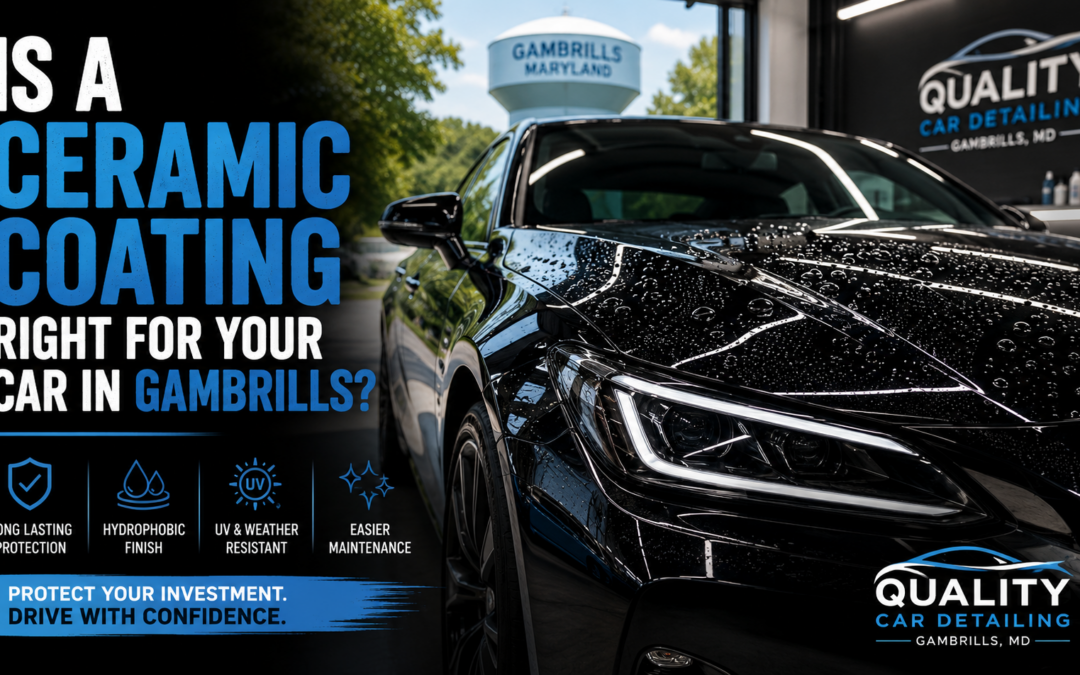
A ceramic coating is a liquid polymer applied to a car's exterior that bonds with the paint to create long-lasting protection against UV damage, water, dirt, and light scratches. For Gambrills car owners, the real question is whether your vehicle, your driving habits, and your maintenance routine make a coating a smart investment. Here's how to decide.
Key Takeaways
- Ceramic coating bonds to paint for years of protection — it's not a wax that washes off.
- It makes washing dramatically easier thanks to hydrophobic water beading.
- Coatings don't fix existing damage — paint correction must come first.
- Maryland UV, humidity, and road salt make coating especially valuable for daily drivers.
What a ceramic coating actually does
A ceramic coating chemically bonds with your vehicle's clear coat, forming a semi-permanent protective layer. Unlike wax, which sits on the surface and degrades in weeks, a coating becomes part of the paint system and lasts for years.
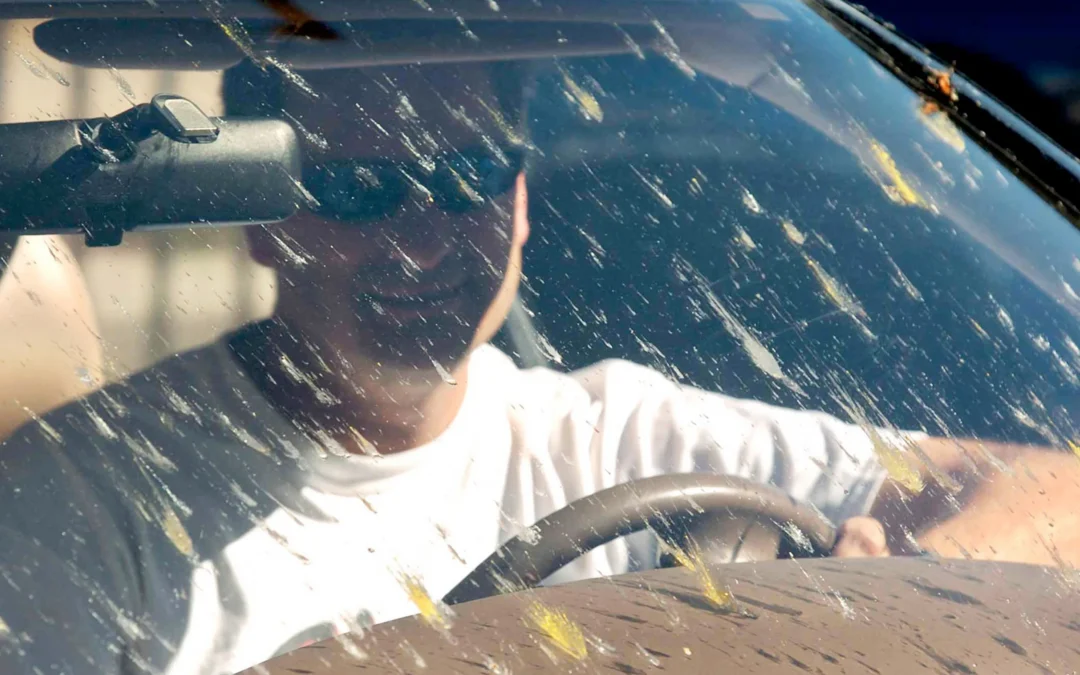
That layer is hydrophobic — water rolls off in tight beads, carrying dirt with it. It's also resistant to UV oxidation, bird droppings, bug acids, and light chemical exposure. The result is paint that stays glossy and clean for far longer between washes.
Why Gambrills owners benefit
Maryland summers bring intense UV that fades and oxidizes unprotected paint. Winters bring road salt that etches and corrodes. Spring and fall coat every surface in pollen and tree sap. A ceramic coating creates a barrier against all three.
For daily commuters, that means less frequent washing, easier cleaning when you do wash, and paint that still looks deep and glossy years down the road.
When a coating isn't the right call
A coating will not hide existing defects — it will lock them in. If your paint has swirl marks, oxidation, or scratches, those need to be corrected before any coating is applied. Skipping paint correction and coating directly over damaged paint is the most common mistake we see.
A coating also isn't a substitute for PPF if your primary concern is rock chips. Coatings resist chemicals and UV; they don't absorb physical impacts.
How to choose the right tier
Coatings range from 1-year entry-level options to 10-year premium systems. The right tier depends on how long you plan to keep the vehicle, your budget, and how much maintenance you're willing to commit to.
Frank reviews every vehicle individually and recommends a tier based on paint condition, driving habits, and ownership plans — not a one-size-fits-all upsell.
Frequently Asked Questions
Will a ceramic coating make my car scratch-proof?
No coating is truly scratch-proof. Ceramic coatings resist light scratches and chemical etching but won't stop a rock chip or a key scratch. For impact protection, pair with PPF.
Do I still need to wash a coated car?
Yes, but far less often and far more easily. The hydrophobic surface lets you rinse off most dirt without aggressive scrubbing.
Ready For Frank's Recommendation?
Skip the guesswork. Frank personally reviews every vehicle assessment — inspecting paint condition and matching the right protection to your vehicle, your environment, and your budget.